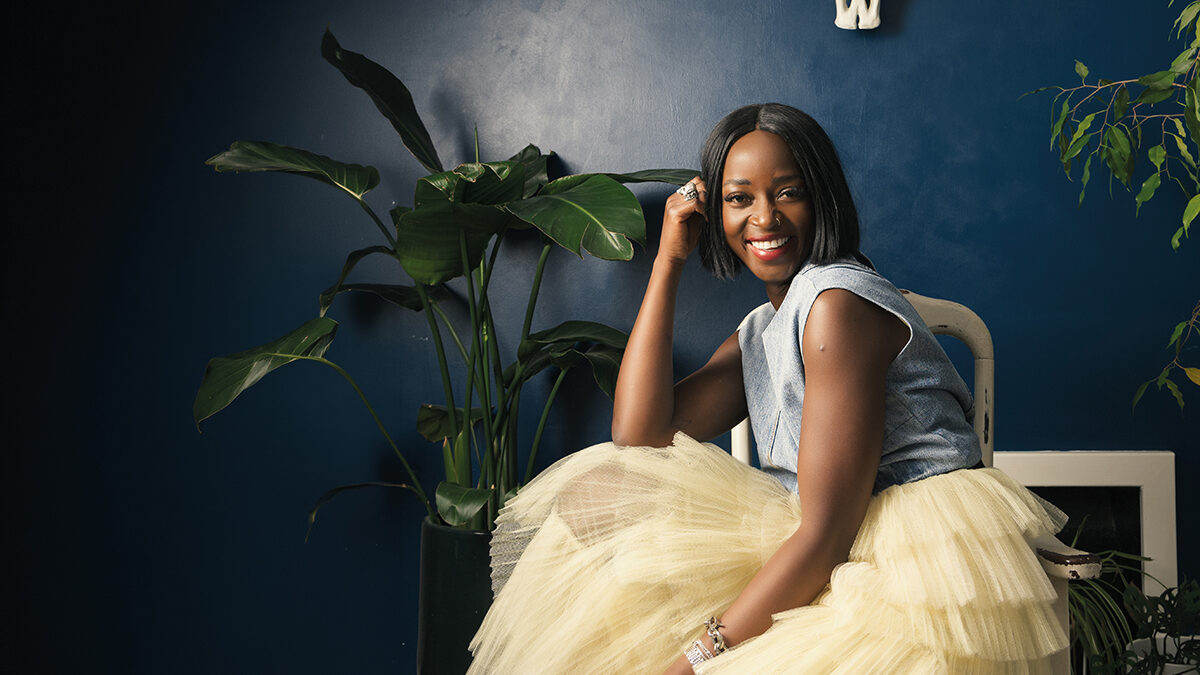
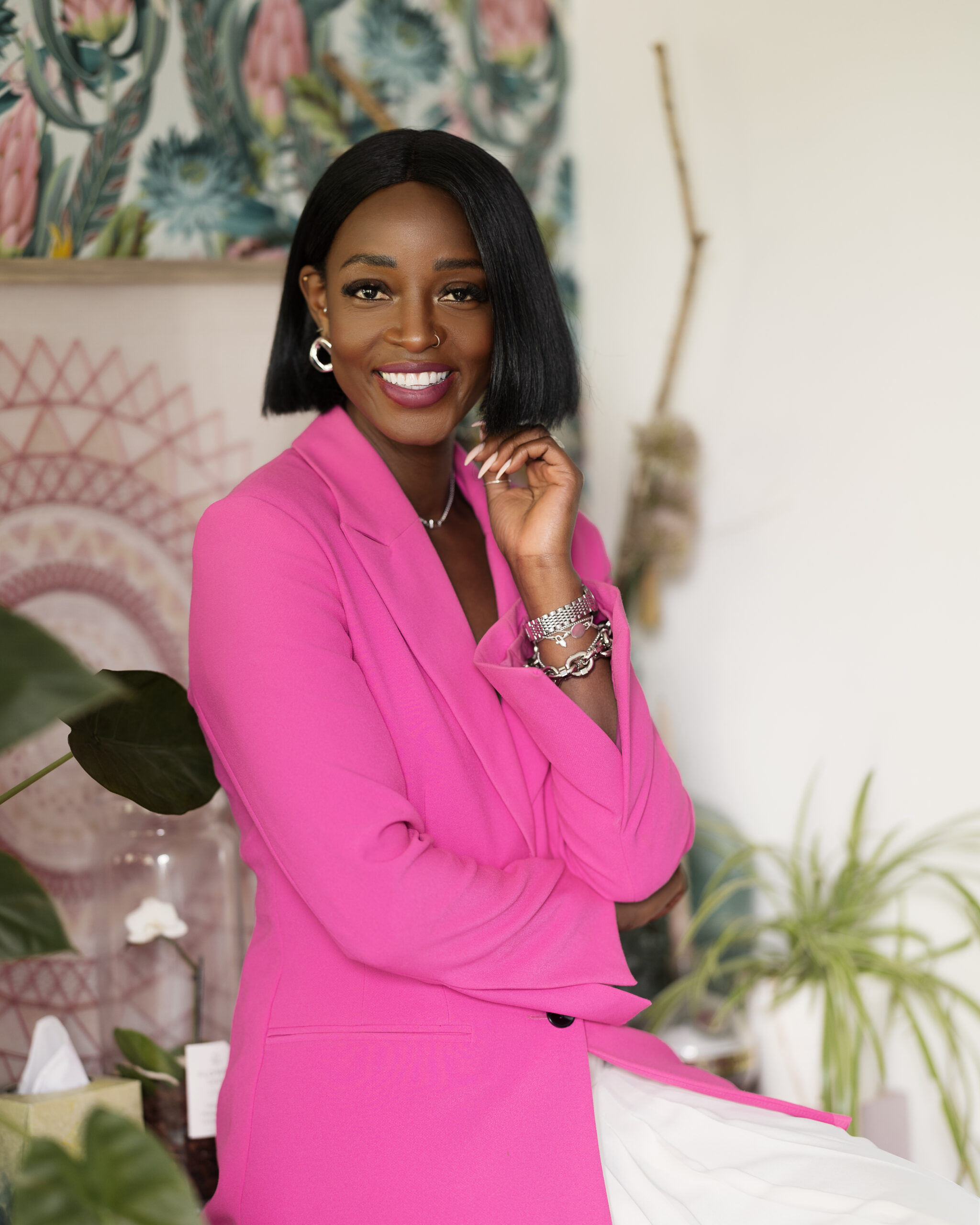
Sophia Lorimer, owner of styling business Fine-Tuned Wardrobe, speaks to Catherine Hill on how clothes have the power to hold us back - or propel us toward success.
From dressing the Cannes Film Festival to giving style advice in the House of Lords, Crawley-based stylist Sophia Lorimer is undeniably making her mark – and, as of the last few months, celebrating a recent win at the ‘Women Changing the World Awards’. A pretty lofty title, she concedes – but sparked from a love of dress-up that all began in a cupboard.
We, as people, tend to hold a complicated relationship with our clothing. We buy too much of it (around 120 million tons are sent to landfill globally); we buy things that don’t fit (some surveys report up to 93% of clothing being returned due to incorrect sizing), we buy clothes we never wear, and wear clothes we end up hating.
It’s one of the earliest relationships we have – with babies first dressed moments after birth- and yet it is one of the hardest to define.
Do we choose clothes based on their practicality, or their impact? Do we wear certain colours because we like them, or because they make us look good?
Sophia, who first started her styling business Fine-Tuned Wardrobe in 2018, tells me she is not here to make that definition for her clients, but to guide them to their version of it. ‘‘I always say to my clients and people that I speak to, ‘the clothes are the cherry on the top.’ What does your life look like? What do your values look like? Do your clothes fulfil that? And if they don’t, how can we change that?’’
And while the world of fashion can feel impenetrable in its remoteness from everyday life (a quick glance at a catwalk can offer up many questions – the first of which being ‘how could that even be worn in public’), Sophia’s most powerful memories which stirred her passion for clothes, revolve around a cupboard, and a few empty pots of paint.
‘‘I’m from a huge family, so growing up, space was very limited, but I wanted my clothes to be properly organised. I turned this understairs cupboard into a walking wardrobe, using old paint containers to hang up pictures of outfits, and really built a sense of pride in putting things together’’.
And so her foray into fashion began its course. Sophia started her business when she was thirty following the birth of her first child – a challenging initiation into entrepreneurship, without doubt, but one that came to define the very identity of her work.
‘‘I had my daughter and everything changed. It was like somebody had cleaned the glass, and I could see clearly again.’’
Sophia struggled with postnatal depression, which coupled with the loss of self often triggered by motherhood, the seemingly impossible demands of her changing body, and a severe and unexpected diagnosis of eczema in her child, drove her ‘down the rabbit hole of clothes’. ‘‘I needed to put [my daughter] in really good fabrics. But then my wardrobe was full of plastic. And then it escalated into who’s making the clothes, where are my values now as the woman that I’ve become.
All of these things started to almost unravel – things that I’d never even thought about before.’’ Sophia was driven, by both her newfound identity as a parent, and the need to care for her child, to ‘let go of the old version of self.’ And with this – her business ‘baby’ came to be.
Fine-Tuned Wardrobe centres itself around an acronym of tenets, with one being ‘ethical sustainability’. How can a business structured around fashion, of which the industry is responsible for up to 10% of global emissions, sit comfortably with this title?
‘‘Fast fashion can only go away if we are educating ourselves on its impact. It’s so easy to see influencers on your phone and buy what they’re wearing without even giving it a second thought. I’ve had clients that have brought wardrobes and suitcases full of things they have just bought on the whim. My mission is to sow the little seed, to make the connection. If people can come to understand what goes into production, if they come away with new ideas to style old pieces rather than constantly being on the hamster wheel of consuming, then I’ve met my purpose’’.
The other tenets, which spell out ‘AGENCY’, are ‘acceptance’, ‘growth’, ‘no rules’, ‘connection and confidence’, and ‘you’. For Sophia, these tenets are her way of navigating the tensions of styling, with clothing simultaneously serving as both a layer of performance, and an expression of authentic belonging. Sophia is single-minded about the ‘agency’ clothes can and should provide – building a business that is about the positive feelings clothing can enable, rather than the emotional distance they often create.
‘‘If you are in tune with your body, and you are really going and doing things that make you feel powerful and confident, and all of these things, and you are walking into new places, or meeting new people, you are going to make decisions from a place of power, rather than scarcity.’’ She alludes to past clients who have ‘been scared to speak in public’, or ‘been stuck in harmful relationships’, and gained a confidence through their clothes that allowed them to ‘appear on national television’ or walk out at a time when it mattered the most. ‘‘It’s much, much bigger than people think it is.’’
Sophia acknowledges the limitations of the term ‘stylist’, particularly in regard to the community aspect of her role – which she has gravitated toward ever since the business started.
What first began as donating unwanted garments from clients to a number of charities in the area has since expanded into knitting hats and mittens for the homeless, and working with London-based charity Smart Works to ‘help vulnerable women get back into work’. ‘‘It’s what I get up for, and that’s why I do what I do. I want to help more women to help more women.’’
What has she learned from all the years of working with her clients? ‘‘Our clothes hold way more than we realise – in terms of identity, people, even regrets. If you’re looking in your wardrobe every day, and you’re still not thin enough for everything that’s in front of you, what’s the ripple effect that that’s having on your self-esteem? Our wardrobes become a symbol of a dream life’’ – one that Sophia adds only makes space for the most heightened, and idealised version of reality – rather than ‘scrambling to make dinner after a long day’.
‘‘Our clothes’’, she concludes, ‘‘should allow you to show up for yourself in a way that you feel that you belong.’’ All the rest is merely a mirror – showing us our fears and hopes; revealing that which we’re not, and that which we cannot force ourselves to be.