Stuart Beare, the owner of Tulleys Farm, speaks to Catherine Hill on how a century-old family business grew from wartime pickling to building a nationally recognised brand.
Despite his self-described ‘plummy voice’ – a hangover from his privately educated college years – Stuart Beare’s CV makes one thing clear: he knows a hard day’s work.
When looking for the source of his ethic for ‘doing good things well’, it’s pretty easy to find it in the threads of family that have bound together his inherited progeny, Tulley’s Farm, for over a century. Originally a family farming business in Devon, Beare’s great-grandfather spent his days selling apples, honey, and eggs – even engineering some of the systems to support the production – but following the financial carve up of the Wall Street Crash in 1929, he ‘upped sticks’ and moved the family to Littlehampton. It was here the first streaks of Beare entrepreneurialism began to peek through, with the family embracing the enduring power of the pickle to sustain army canteens during the Second World War. Beare’s grandfather then became a tenant of what was at the time called ‘Worth Hall Farm’, setting up a pick-your-own strawberry concept that expanded through the seventies (a time that Beare describes as ‘typical… gym shirts at school…the inappropriateness of the tv shows…’).
As the farm grew, Beare established the two central poles that would define his life as a business owner: taking an HND in commercial horticulture, which taught him the basics of crop production, and just prior to this, tackling set design at Ardingly College’s theatre department.
He joined the family business in 1991, setting up a farm shop just a year later. He wanted to sell pumpkins, but no-one wanted to buy them, so he conceptualised a pumpkin festival – and watched as numbers doubled, then tripled, year-on-year.
A particular year that seems to loom large in Beare’s memory is 1997, in which the family switched from being tenants to owners. ‘‘We were very fortunate’’, he says.‘‘We became a destination’’.
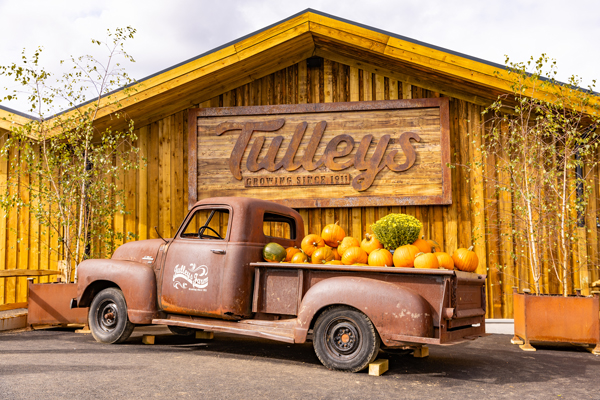
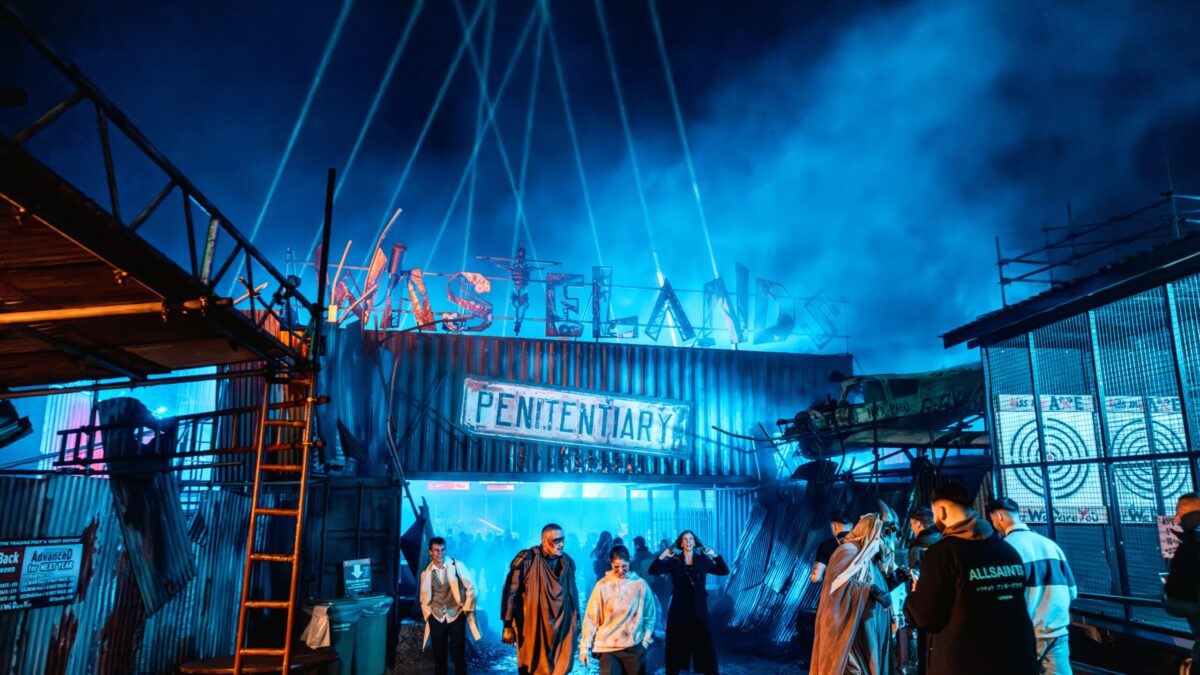
Since that fateful year, Tulleys has grown, in many ways, beyond recognition of its humble beginnings. The Beare family has established a veritable metropolis of offerings; Shocktober Fest, which Beare claims ‘is all about finding the funny in the scary’, pumpkin pickings, the newly launched Tulip Festivals, and an award-winning group of escape rooms to name a few. Its influence, both locally and nationally, is hard to deny – tube stations carry posters inviting prospective visitors to ‘the home of Halloween’, or offering the ‘chance to see 1.5 million tulips in bloom’, and in videos across its social media channels, visitors describe hours-long journeys from across the country, captivated by the chance to immerse themselves in the farm’s uniquely themed experiences.
When it comes to the pumpkins, Beare says, there are two key events that heralded in a new era for the farm. ‘‘The first Harry Potter came out in 1997, and it transformed the whole landscape. Kids wanted Harry Potter parties, and pumpkins were a part of that. And then, Walmart bought Asda in 1999, and flooded the UK with Halloween party merch.’’
Does the American influence extend further than just good timing and scary costumes?
Beare refers to Jaycees Feargrounds, a South Dakota haunted house that opened in 1974, after remodelling an abandoned property and ‘filling it with over-the-top scares’, that were more campy than threatening. ‘‘That’s where the bones of our approach come from – it’s about the humour of it all, rather than the feeling of fear.’’ ‘‘Tulleys has this kind of New England, American frontier vibe to it. We even go as far as referring to autumn as fall. A few people complain, but it’s part of our DNA.’’
Something Beare says the team very consciously pull inspiration from is America’s level of customer service. ‘‘From the parking attendant through to the actors, we’re trying to foster a culture that is about being positive and fixing things quickly. We don’t always get it right, but we’re really proud of it.’’
This ‘dual-citizenship’ aspect of Tulleys extends into its very identity as both a farm, and an entertainment venue. Agri-tourism, a term that defines the combination of farm life and recreational activities, has in many ways, been contextualised by places like Tulleys, which alongside the other 72% of working farms embracing diversification (although Tulleys is by some stretch the largest), symbolises a growing desire among the consumer for multi-sensory and immersive experiences. Shows like Clarkson’s Farm bring this to the fore – the act of farming becomes as much about the entertainment value as the labour itself, with millions of viewers tuning in to watch the ‘spectacle’ of what is at its heart, a civilisation-old ritual – to grow, and to feed. How does Beare tread this tension? ‘‘At the heart of Tulleys is this: we’re selling the experience, we’re selling the atmosphere, we’re providing the backdrop, that fact you can sit in an amazing space surrounded by these massive pop mountains, eating a donut that’s authentically American. It’s the atmosphere, it’s the sights, and it’s the smells – all together’’. And, for what it’s worth, the farm does still grow pumpkins and tulips.
‘The first Harry Potter came out in 1997, and it transformed the whole landscape’.
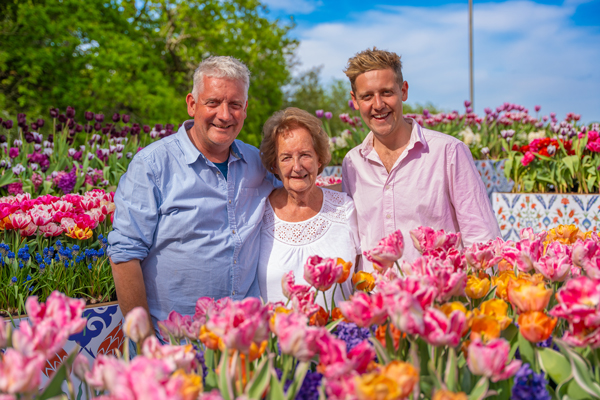
Beare once again refers to the core ‘ingredient’ of Tulleys – how do his instincts work in making sure the ingredient is never left out? ‘‘If I can visualise something, then I can create it. I envision a sort of a rollercoaster tycoon model of what’s going on with something. If we can’t see that, then I would be pushing water uphill.’’ Family, undeniably, is always a central component to the Tulleys identity – and Beare is placing trust in the next generation to not only grow the business even further, but to maintain its ethos and approach. His son Sam, having joined the business several years ago, already made his mark with a ‘drive-through’ farm shop (‘just like Starbucks’ but for tomatoes) and the family still live on site – so are literally a part of the fabric of the farm. Beare also turns to a US-based study group for inspiration – ‘we share people, share ideas. Overall, it’s about stepping up and going the extra mile. Working with family doesn’t suit everybody, but it’s part of who we are’.
The drive-through farm shop was not only significant in bringing back the ‘farm shop’ offering that Beare first entered the business with but also marked the beginning of untrodden territory for Tulleys – a global pandemic. ‘‘I remember on the Friday evening, at 5 o’clock, the country went into lockdown. We decided to think impractically – and focus on what we wanted to do, rather than what we couldn’t. Sam’s mum said – ‘Why don’t you open up a farm shop?’ I said we couldn’t. Sam said – ‘Why don’t we make it a drive-through?’’ Beare said: they could. Within days of lockdown having been announced, Tulleys began a manic operation – reigniting connections from previous wholesalers, taking in fresh produce, and establishing an ordering system that was built to withstand demand.
The shop grew into a socially distanced meeting ground for claustrophobic families – with kids standing on the seats, peering out of sunroofs, and shouting over cars to enact a kind of normalcy in the most abnormal of times. ‘‘We made a few mistakes’’, Beare admits shruggingly. ‘‘A few ended up with cherries rather than cherry tomatoes.’’ But the farm shop, whether consciously or not, bridged an offering gap in typical Tulleys fashion – it brought people together, and sustained the business in an uncompromising social environment. On a macro-level, the drive-through farm shop is the embodiment of what Tulleys – and the Beare acumen – have been all about. With the number of British farms in steady decline since the late 20th century, and a sharp ramp-up of weather extremes, to embrace change is not just to innovate, but to survive. And, with over 150,000 visitors a year, Beare must certainly be content with the level of resilience the farm has now reached.
I ask Beare what his favourite stage sets to build were. He mentions a sand island on the set of South Pacific, a musical set against the backdrop of the Second World War, with a strong message of embracing a rapidly changing world. Concluding the interview, Beare recommends me a book: The Experience Economy by Joe Pine, which at a glance, seems to suggest all the typical hallmarks of a business theory guide; offering ‘real-world evidence’, concept diagrams, and analytical breakdowns of ideas. However, a subtitle on an early 1999 edition, likely the edition first read by Beare, catches my eye. It simply reads: ‘Work is theatre, and every business a stage’.