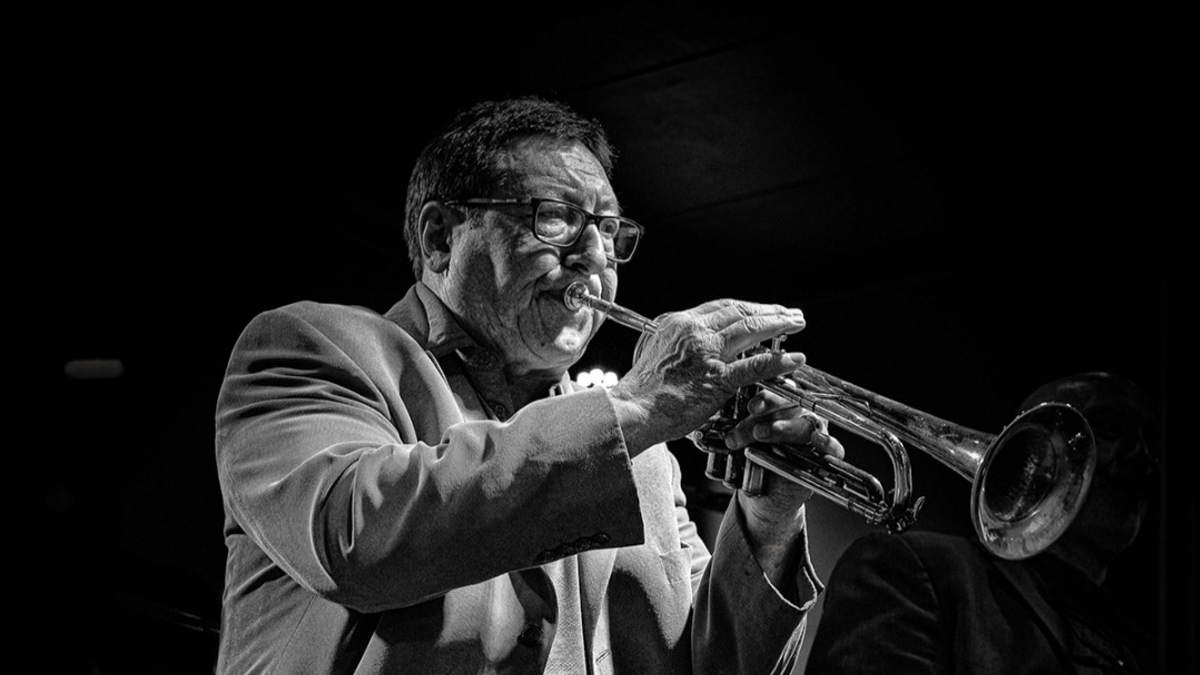
Now entering his fifth decade in the music industry, trumpeter and Lingfield Jazz Club founder Graham Russell speaks to us on a career that hinged on the flip of a coin.
What does Graham Russell, I wonder, consider his peak? Was it eating lunch with Sir Paul McCartney, and getting to try on one of his early-days Beatles basses? Swapping tacky Blackpool souvenirs with Dame Shirley Bassey? Watching Jurassic Park 2 with Rod Temperton in his home cinema? Nicking Jay Kay’s hat on a tour bus?
All these things are, in their own right, the perfect closer to dinner-party conversation. They’re the kind of anecdotes you co-opt into your own storytelling, a once-removed narrative cousin. ‘‘I know someone who.’’ A lesson in our nature as observers of interesting things. Collectors of heard experience.
Graham is well-versed in playing the accompaniment to the spectacle – quite literally so. It’s a strange life, that of a band musician. The audience notices you play, without really registering you were there at all.
Graham does not have the personality, however, of someone who sits in the background. His stories overlap with speed and intensity, sentences crashing into the next as if the words are anxious to be left behind. He is quick to laugh – often at his own expense. He tells me a joke: ‘‘How does a musician become a millionaire? Starts with two million pounds.’’
Another question, sans the joke. How does a musician become a musician?
His story starts on a winter’s day, with a boy called Russell Killick. Russell Killick was tall, very tall – six feet tall by the age of thirteen. His height meant many things; he grew out of trousers quickly, he wore large, uncompromising shoes, but most significantly for future trumpeter Graham Russell, it meant he could reach to the top shelf of the school’s music store cupboard to grab the last trumpet. And so, in a spin of the fates’ spindle, Graham walked away with a trombone.
Wrongs have a peculiar way of being righted. Russell and Graham walked home, reaching the peak of an ice-capped hill. ‘‘Let’s toboggan down’’, Graham said. Russell was reluctant – his legs would hang over the smaller trumpet case. And so, they swapped. ‘‘I nudged it’’, says Graham, smiling coyly.
Graham took up lessons with Heather Crump (‘a skinny, witchy-like woman’), who was delivering somewhat outside of her comfort zone, given that she didn’t play the trumpet, rather the French horn. ‘‘‘You’re a fine player, Graham,’ she once said. ‘Would you give me lessons on the trumpet?’’ Cue exit.
In the end, much like the fortuitous descent down the hill, Graham’s future reached a similar fork in the road. “It was a Sunday night, and I was starting on Monday – either at the insurance company or at music college, and I was up all night. It was three in the morning. I was literally tossing and turning; what to do. I know my dad wants me to go into insurance, and I want to go into music. And so, you toss the coin. Best of three, best of six.’’
He burst into his parents’ bedroom. ‘‘Mum, dad, I’m going to college’’.
Graham enrolled in the mid-seventies. Music schools were buffered, in many ways, from the rising cultural temperature outside. British punk was dissembling its forebears, rejecting the long-established four-chord principles that once topped the charts. Things sounded different, clothes frayed at the edges. At the London College of Music, however, the revolution was a little slower to arrive. ‘‘Jazz was a complete swear word. You could not mention it. When I started the idea of trying to get a jazz band, I couldn’t find enough musicians from one college – so I had to go around to all the others, Guildhall, the Royal College of Music, the Royal Academy – and pull them together’’. Success was marked in the library – ‘‘I eventually got the Mozart Monthly replaced with Jazz Journal’’. Graham was awarded a medal by W.S. Webber for his work. In his mind, he had only just begun.
He was worried, when he took the first steps of his career, by his phone number. ‘‘If you didn’t have the London code, you wouldn’t get called – simple as that. You had to take up a lot on the side just to keep going.’’
A lucky break came in the form of Fidder on the Roof, in the West End. He asked Topol to sign his poster. Then came Starlight Express. The musicians were out of view from the audience. They exchanged silent jokes, refused to put in earplugs, wore shorts in the summer to stay cool. Graham ‘depped out’ a lot, meaning he substituted other players for his parts, keeping his hat in the ring for other projects– and later discovered the stage ceiling was built using asbestos. ‘‘No fresh air, no air conditioning’’. Eight members of the band died from cancer, which he believes is linked to the roof they played under. ‘‘Poor attendance saved my life’’, he said.
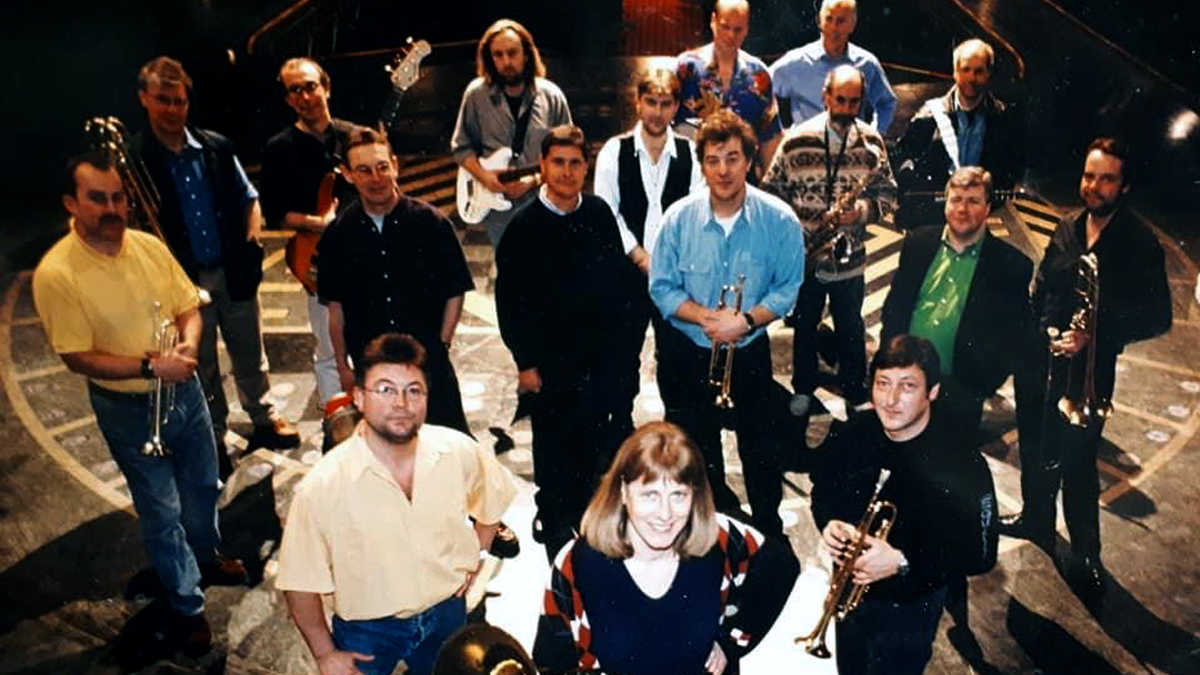
West End production of The Starlight Express (1980s)
This was the 1980s, and Graham felt he had found his feet. Paul Mcartney was looking for brass players for a studio session. He came to Hog Mill studio, on the outskirts of Rye. There were ‘peacocks walking around’, trees ripe with fruit. The studio was hidden under a windmill – a cleverly exploited planning permission loophole. Linda McCartney served the musicians an early prototype of her vegetarian sausages (‘they’ve improved a lot since’), and in a break between playing, Graham spotted a 1963 Hofner bass propped in the corner. You may not be familiar with the instrument, but you’re likely with its performance credits. ‘I Want to Hold Your Hand’, ‘Can’t Buy Me Love,’ ‘Ticket to Ride’, ‘Day Tripper’. McCartney noticed his interest. Moments later, Graham felt the bass being put around his neck. Stuck with ticker tape on the back was one of the original song lists from The Beatles’ early performances. ‘‘I’ve got a terrible memory’’, McCartney confided.
A friend mentioned in passing that he was working with a band that had just come out of Borstal. He needed work in London. Would Graham like to do the three-week tour? And so, with him taking the reins of Starlight Express, Graham hit the road. The band, as it turned out, had just released their debut album, ‘Emergency on Planet Earth’, which over the course of the next few days, became the fastest-selling album in the country since George Michael’s ‘Faith’. The band was called Jamiroquai, and according to Graham, were ‘pretty badly behaved’. Caught up in the unexpected success of a group that hadn’t had quite established their direction of movement, let alone their musical identity, Graham ended up spending the next few weeks witnessing the various hijinks that tend to accompany those that have found fame without context. An arrest at the airport for jumping on the luggage chute. Showing up four hours late to the bus. The latter was the final straw for Graham, who, was ‘homesick, with a newborn baby’. Graham took Jay Kay’s hat, pulled him over his lap, and ‘smacked him’ – ‘everyone was cheering’. ‘‘That was my introduction to the world of pop’’.
Graham was now approaching two decades of work in the industry. Looking for something a little longer term to attach himself to, he found himself working as first trumpet in Shirley Bassey’s 30-piece orchestra. This, in many ways, represents the beating heart of Graham’s career – he describes Bassey like a ‘glamorous queen…her aura was beyond anything and everything else’. Bassey was unusually friendly to the players comparatively to other performers – most ignored, some provoked, but Bassey took interest, Graham says – she asked questions, and adjudicated a competition for Blackpool’s cheapest souvenir, staged by the band. She affectionately called them ‘her boys, her girls’. Midway through her performances, Graham said, with a glint in his eye, Bassey would leave stage to change outfit – an assistant would help her out of her clothes, while another would pour her several glasses of pink champagne. In the late nineties, Bassey and the smaller version of the band came to Monte Carlo for a ‘big benefit gala’ – celebrities were auctioning their phones to raise money for charity. Graham was relieved when he played his last note – after a long day travelling and performing, he was looking forward to a night out on the town. Then, Bassey called out, in her signature Welsh lilt: ‘‘Let’s have a donation for me doing another tune’’. Graham described what followed as ‘tumbleweed’, that is until Elizabeth Taylor, sat at the front table, raised her hand. ‘‘Thirty thousand dollars’’. They were best friends, after all. Graham retuned his trumpet, and grudgingly played the tune.
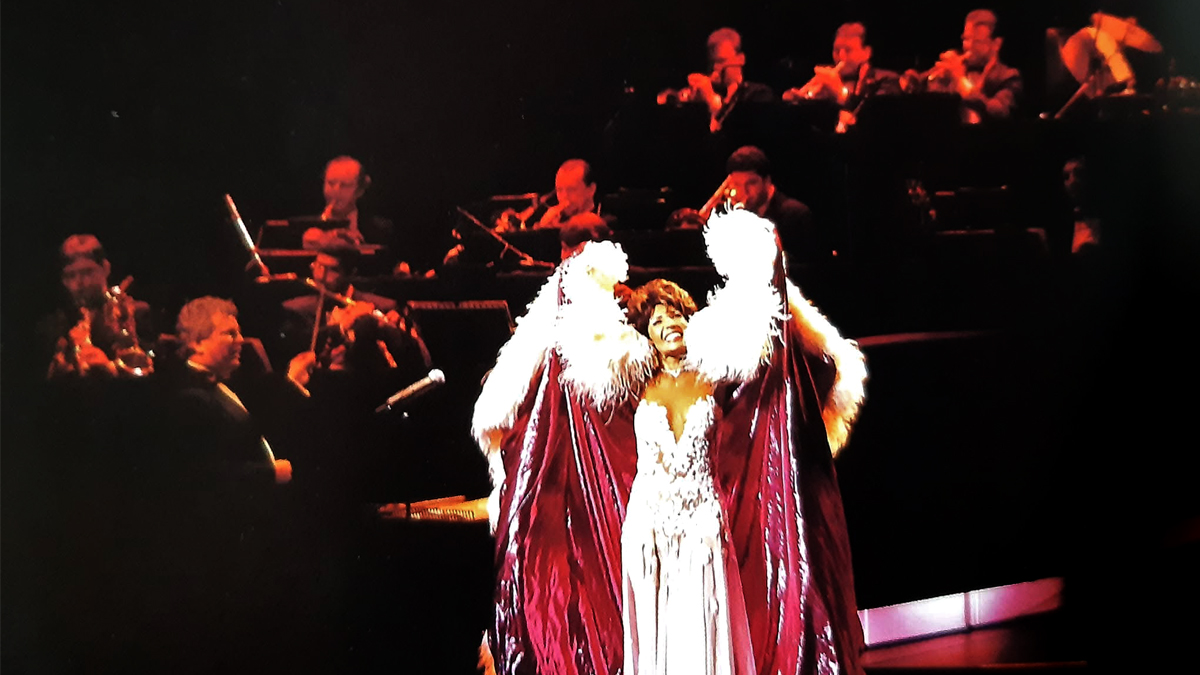
Performing with Shirley Bassey
Around two decades prior to Elizabeth Taylor’s timely intervention, Graham ‘went out with’ a girl called Kathleen Buckley. They shared the same desk in the classroom, exchanged longing looks, kissed, awkwardly, on occasion – all the typical sweaty-palmed hallmarks that define the pre-pubescent relationships that aren’t all that defined. When they grew up, they stayed in touch – Kathleen would sometimes come to his performances. One time, she asked to bring a boyfriend. Graham arranged for an extra ticket, but was a little taken aback following the performance, as he was greeted by his personal musical hero and former member of funk band Heatwave, Rod Temperton, who is perhaps best-known for his songwriting credits: Michael Jackson’s ‘Thriller’, ‘Off the Wall’, and ‘Rock with You’. Joining Temperton and his former schooldays girlfriend for dinner was SNL comic and actor Maya Rudolph, with whom he made stumbling small talk in the taxi. Upon arrival, Graham was bewildered by the contents of the menu, so Temperton told the waiter to bring him a miniature version of every dish. They returned to the apartment, where Temperton set up a screening of Jurassic Park 2, which had just been released (mostly to unfavourable reviews). Sat in Temperton’s home cinema, as the credits began to roll, Graham had a train to catch. He made his shuffling apologies, and had gotten halfway down the apartment block, before he realised he’d left his trumpet behind.
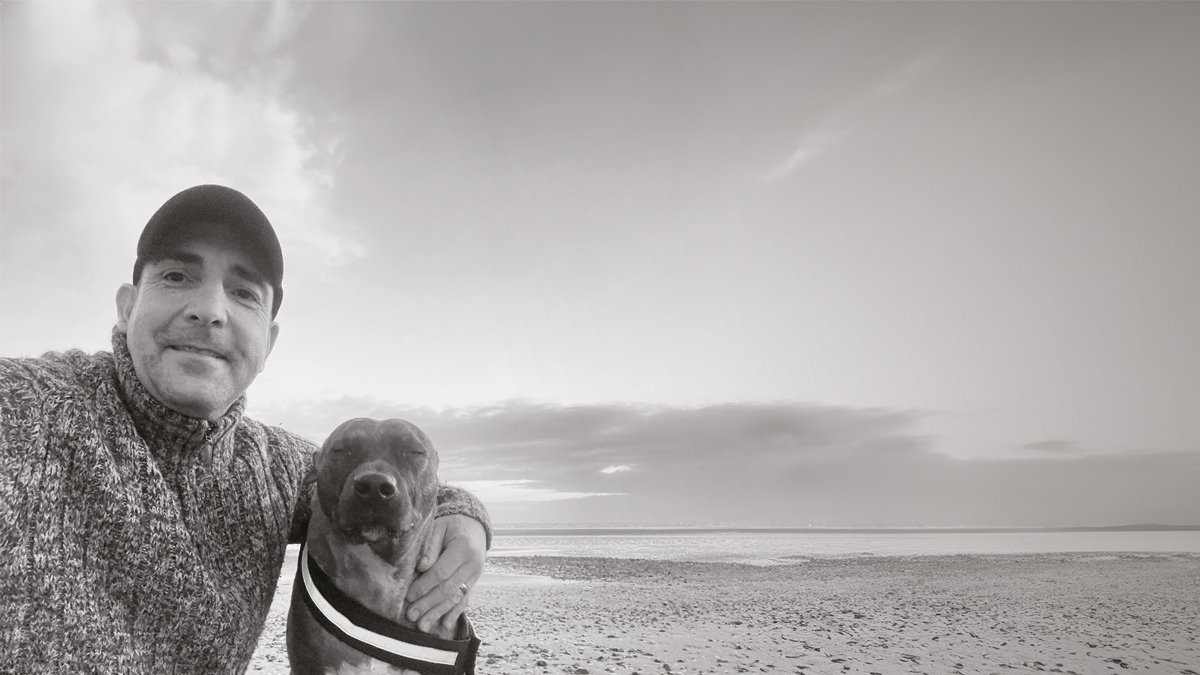
Nowadays, Graham is happy to be spending more time at home – in this sense, he’s less likely to lose his instrument. He lives in Lingfield, with his wife of forty six years who he met on the QE2 (‘As soon as she walked in, I went, well, that’s the girl for me’), teaches the trumpet, runs classes in schools, and as of this year, has set up Lingfield Jazz Club – which now has over 200 members, and at the time of interview, was warming up for its third event. The industry is different now, Graham says. Funding has been cut, less music is taught in schools, and rising costs means lower paid jobs – like that of a session or band musician – become prohibitive to living, rather than just being a stylistic point. Lingfield Jazz Club, says Graham, is the amalgam of a fifty year-long career – it’s about connecting the community at a point of crisis. ‘‘I’m fighting for live music.’’
‘‘The biggest question I ever got asked all over the years I’ve been playing,’’ says Graham, ‘‘was ‘What kind of music do I like?’ It’s a simple answer: good music. I don’t care what genre or style, as long as it’s done well.’’ The jazz club is Graham’s way to connect the good with an audience, leaning on his connections and experience to build a programme of talent that celebrates those in the earliest stages of their career, and those who have discovered their passion for music a little later in life.
He shows me a video of a teaching session he recently took part in, at the local library. There’s a set-up of instruments, and a raptured audience of under 8s. His six-year-old grandson is holding a ‘p-bone’ (plastic trombone) and struggling to make a noise. ‘Blow, like this’, Graham says, pursing his lips, and making a buzzing sound. Finally, a note appears. I have the sense of witnessing a defining moment in this boy’s life. I can’t help but wonder what would have happened, if Russell Killick hadn’t fancied sledding in the snow. A lot less stories. Considerably less jazz. The trek downhill would’ve taken longer, in any case. And who, really, turns down a shortcut?