A five-metre iceberg, shire horses woven from hazel and nearly 1,000 lanterns that have been lit, packed away and repaired for more than a decade. As Glow Wild returns to Wakehurst, we ask Producer Louise Burton and Trail Curator Katherine Morton what it takes to light up a living botanic garden in midwinter – and why the work never really stops.
How has the event changed since it first launched, and what’s new this year?
Over 13 years, Glow Wild has grown into a much-loved winter tradition in Sussex, but we’re always looking to surprise people with something new. We set out to create a unique trail each year, bringing together artists, community groups and volunteers to illuminate the beautiful Wakehurst landscape in inspiring and unexpected ways.
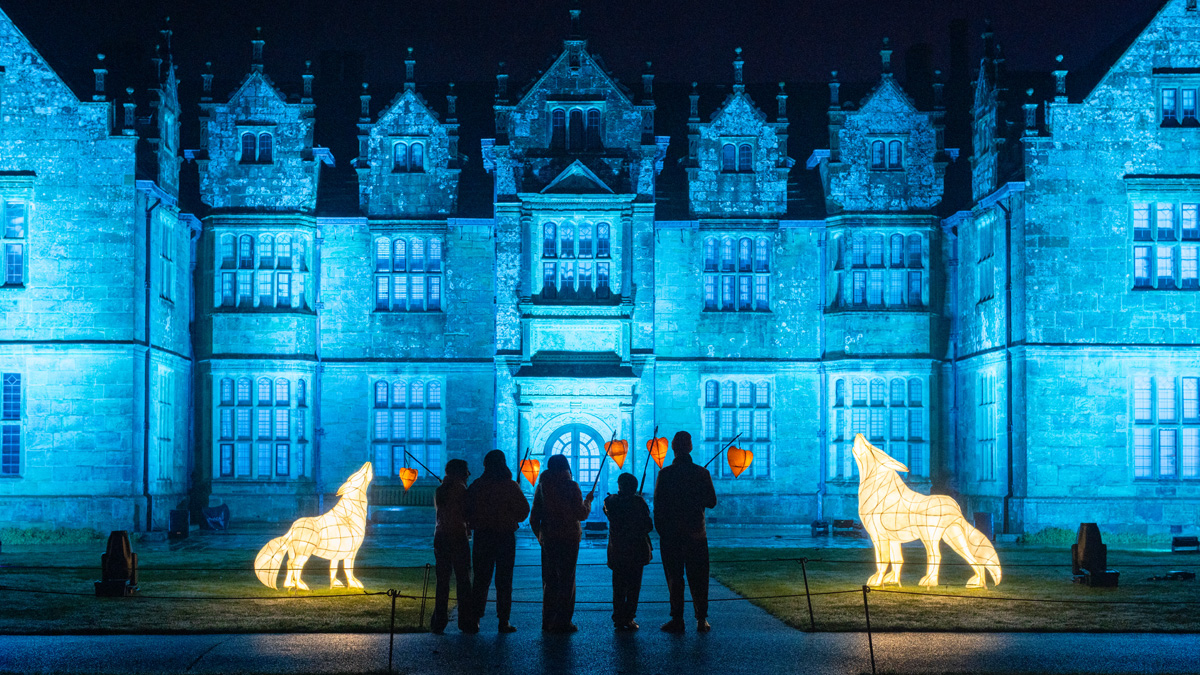
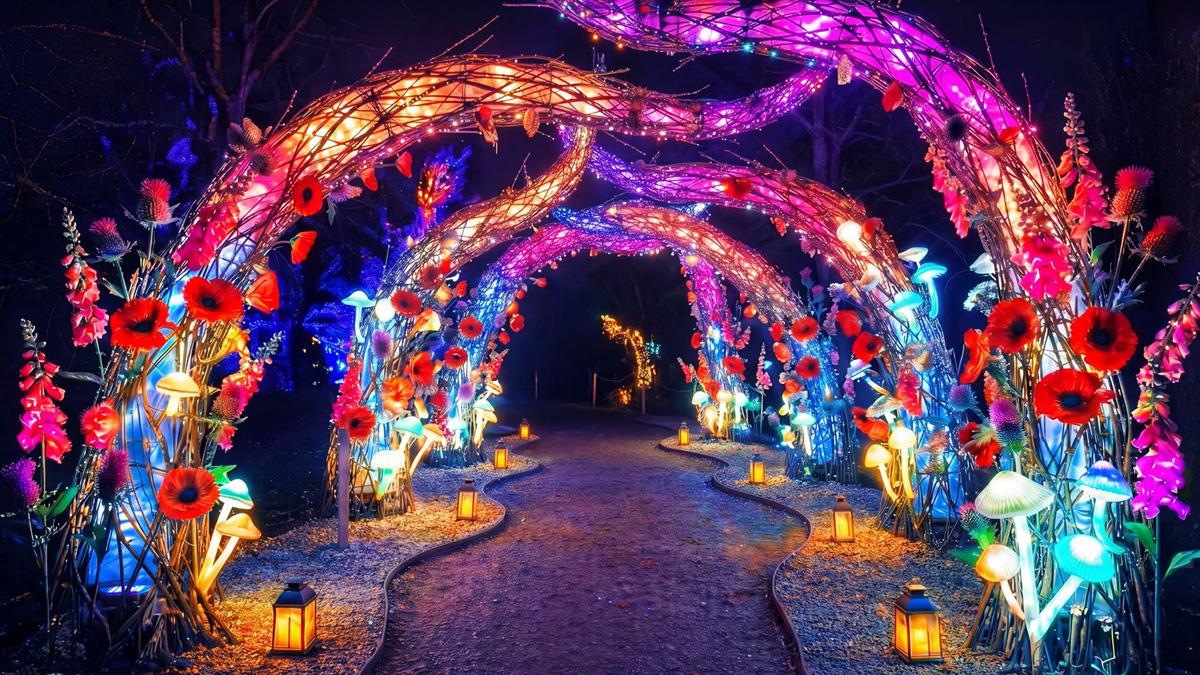
This year is our most ambitious yet. We have the tallest lantern ever created for Glow Wild – an iceberg that’s almost 5m tall – along with 68 penguins and 1,000 fish all made by artist Kerith Ogden; a stunning field of alpine flowers for which Michelle Dufaur has handmade 2,500 individual petals; a new bespoke projection for our Grade I Listed Mansion from Amanda Duncan; giant shire horses woven from hazel by Brockman & Page; a half-hare, half-human moonbeam gatherer from Pyro Studio; a stunning carousel from AndNow and so much more!
Is there a theme or story behind this year’s trail?
This year’s theme is “In Search of Nature’s Gifts”. We’re inviting explorers of all ages to set off on an expedition and discover the extraordinary things nature has to offer, from dramatic polar landscapes to the wonders closer to home that we may sometimes overlook.
Alongside the great spectacles, we wanted to create moments of stillness and wonder to celebrate the gifts of nature that are all around us.
When does planning start, and how long does it take to go from an idea to opening night?
The Glow Wild world never stops turning! As one trail comes to a close, we’re already reflecting on what worked, what surprised visitors and how we can take things further next time. We develop the theme, work with artists on new ideas, plan the route and coordinate the many teams involved. The lanterns are made and repaired throughout the year, then installation intensifies in the run-up to opening night. There are months of creative thinking behind what visitors experience in a single evening.
Who designs the lanterns and installations, and where does the inspiration come from?
We have the joy of working with Wakehurst horticulturists and Kew scientists who inspire us with the amazing stories of plants and fungi we spotlight each year. Then, we have a team of talented artists and makers who respond to our chosen theme with bespoke large-scale installations. Community groups across the county make a significant contribution to the Glow Wild experience, from climate ambassadors in Peacehaven to family support networks and the over 65s. And finally, we have over 200 volunteers who give so much time and love to crafting the lanterns that light up the landscape.
How many lanterns and lights go into the trail, and how long does installation take?
More than 2,000 handmade lanterns illuminate the trail, alongside light and sound installations, projections and more. We also have 1,800 energy-saving bulbs that adorn our magnificent 38-metre Giant Redwood tree.
Installation is a huge operation in the weeks before opening. No matter the weather, everything must be positioned, connected and tested, with lighting and effects carefully balanced against the natural setting. It’s a remarkable transformation and testament to the hard work of our wonderful team.
How big is the team that brings it to life, from artists and technicians to volunteers?
It takes a whole community. Alongside our core production team, we work with artists, makers, technicians, Wakehurst’s horticultural and operational teams and more than 200 volunteers. People give their time and creativity throughout the year, helping to make and repair lanterns and contribute to new installations.
What’s the most challenging part of setting up a light trail in a botanic garden in winter?
The biggest challenge is creating something visually spectacular while respecting a living landscape. Wakehurst isn’t a blank canvas. We’re working among established trees, plants and habitats that need protecting. We have to think carefully about where installations sit, how visitors move through the garden and how everything performs in winter weather – and how we do all this in the face of more challenging weather conditions!
What steps do you take to make the event more sustainable?
One of the most important things is making our lanterns last. We don’t start from scratch every year as we work hard to store, repair and reuse as many lanterns as possible. Almost 1,000 of our lanterns have illuminated Glow Wild for more than a decade. That ongoing care is a big part of how we work.
We also use materials sourced from Wakehurst where possible and use energy-saving bulbs on our towering tree. Sustainability is about making thoughtful choices throughout the process, as well as helping visitors appreciate why protecting the natural world matters.
Are there any hidden details visitors often miss?
Absolutely, but that’s part of the fun. Take a closer look at the penguins in Kerith’s polar landscape as their design blends the striking colours of King penguins with the distinctive crests of Macaroni penguins. And look up to see the Aurora Australis lights commission from The Colour Project.
We’d also encourage visitors to look out for the whale and pink raven lanterns which were the two winning designs from a competition run in collaboration with the East Sussex College Group. There’s so much detail that you’ll notice something different each time you visit.
Above all, we hope people leave feeling awe and wonder for the world in which we’re so lucky to live. Nature is a gift and we all need to protect it.
‘As one trail comes to a close, we’re already reflecting on
what worked, what surprised visitors and how we can
take things further next time’