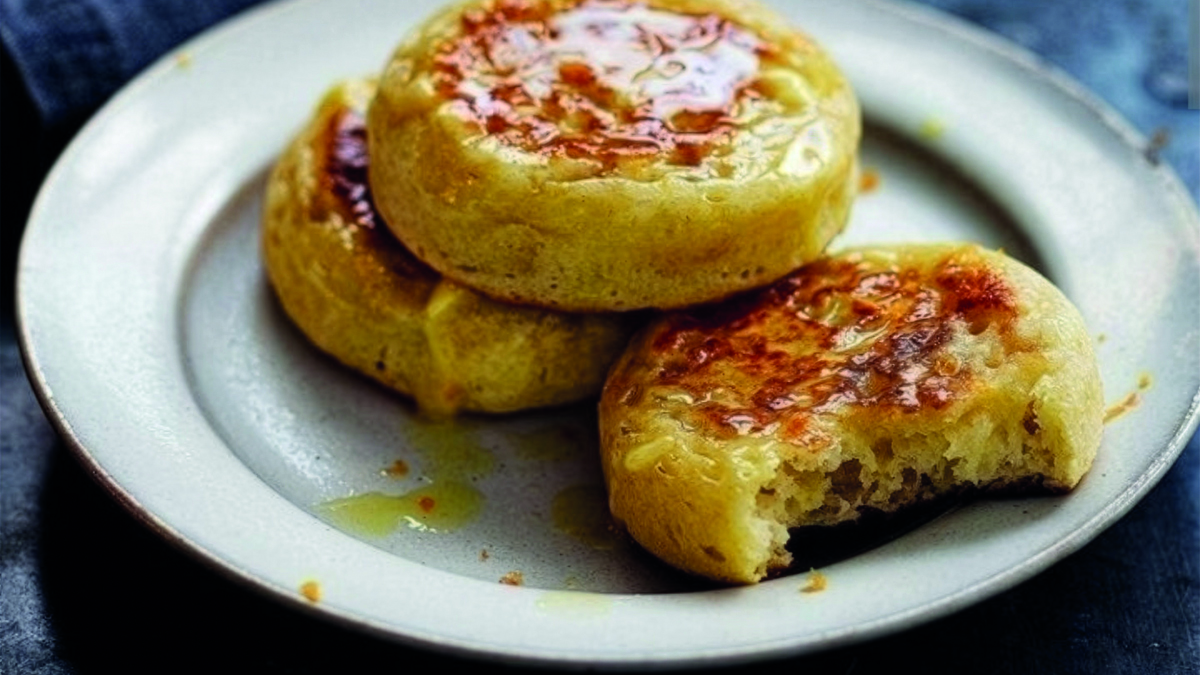
A very buttery history
Early versions of crumpet-like breads can be traced back centuries, although the hole-filled crumpet we know today was developed during the 18th century.
By the Victorian era, crumpets had become a familiar part of British tea-time – known for their spongy texture and honeycomb of holes.
From The Artisan Bakehouse
INGREDIENTS
-
150g white bread flour
-
200ml warm water
-
½ tsp fine salt
-
½ tsp caster sugar
-
1 tsp baking powder
-
1 tsp fast-action yeast
METHOD
Mix the flour, salt, sugar and baking powder. Dissolve the yeast in the warm water, then whisk into the dry ingredients for about one minute until smooth.
Cover and leave somewhere warm for 15–30 minutes, until the surface is foamy. The mixture will only rise by around 10–15%.
Grease crumpet rings with butter and lightly butter a non-stick pan. Heat over medium-high. Fill the rings just over halfway with batter and cook for 1½ minutes, until bubbles appear.
Reduce to medium for one minute, then medium-low for 2½–4 minutes, until the surface is set and bubbles have stopped appearing. Remove the rings, then flip and cook for 20–30 seconds.
Transfer to a wire rack, golden side down, and cool completely. Enjoy slathered in butter.
QUICK TIPS
Be patient: a foamy surface means the yeast is working
Watch the heat: lowering it gradually helps prevent an undercooked centre
Don’t overfill: leave room for those lovely holes to develop
Make ahead: they’re particularly good toasted the next day
The Artisan Bakehouse, located in Steyning, holds a ‘Crumpets, English Muffins and Doughnuts class’ among lots of other baking, cooking and BBQ events.