With the warm air of summer comes the Echinops, also known as the globe thistle, a cool counterpoint to the heat of high summer that offers a big visual impact without the graft. By Stephen Peters MCIHort
There is a lunar quality to Echinops ritro ‘Veitch’s Blue’ (globe thistle ‘Veitch’s Blue’) as its tight, steely buds begin to glow. Over several days, the spheres shift from silver to an electric, humming blue, each floret opening in a perfect spiral. In early morning light, the flowerheads seem to hold their own atmosphere – a soft, metallic shimmer that steadies the border and draws the eye from across the garden.
Yet beneath this beauty lies a plant built for resilience. Globe thistles thrive where others falter: poor soils, dry slopes, exposed sites. Their deep taproots anchor them through the hottest of days, while their felted, silver foliage reflects sunlight and reduces moisture loss. For gardeners navigating warmer, drier summers, Echinops offers a rare combination of drought tolerance, longevity, and sculptural presence.
Bringing it to life
Cultivation is refreshingly simple. Plant in full sun and well‑drained soil, avoiding overly rich conditions that encourage floppy growth. Once established, globe thistles need little more than a spring tidy and the occasional division every few years. In mixed borders, they pair beautifully with Stipa gigantea (giant feather grass), Calamagrostis × acutiflora ‘Karl Foerster’ (feather reed grass ‘Karl Foerster’), and the warm, late‑summer tones of Helenium (sneezeweed).
What to expect
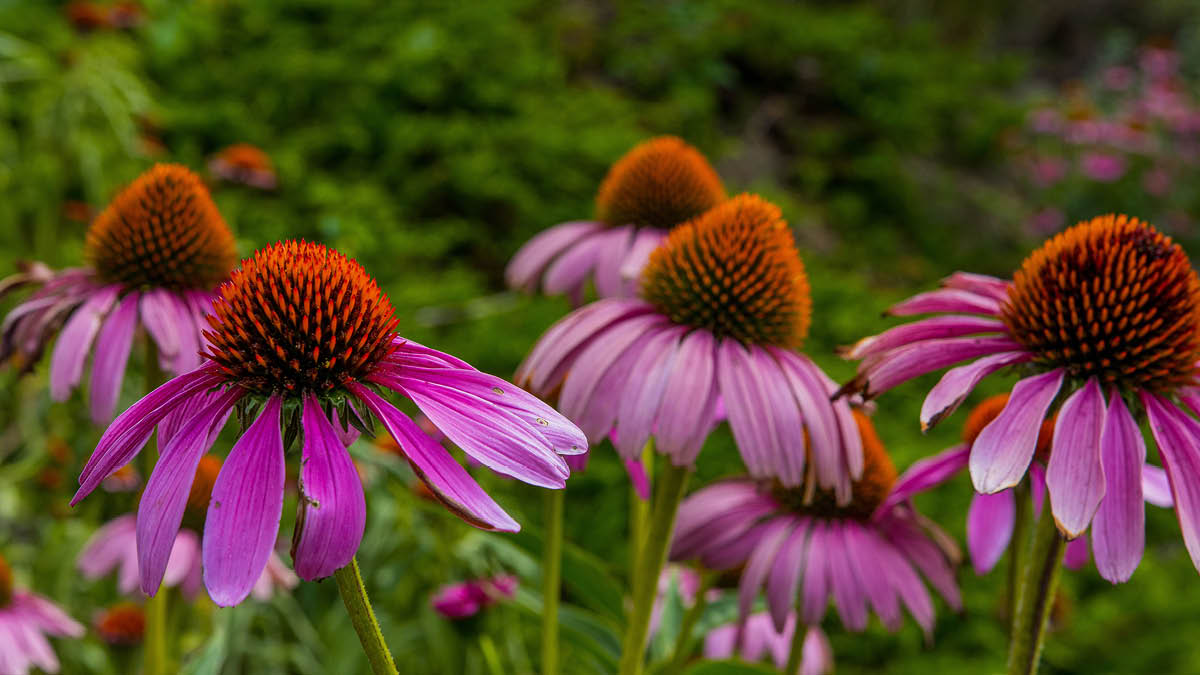
After a few weeks, the flowerheads will hum with life. Bees, hoverflies, and butterflies crowd the spheres, grateful for the dense nectar supply during a seasonal lull. And when the colour fades, the seedheads remain, pale, architectural silhouettes that carry the garden gracefully into autumn.
In the height of the heat, Echinops stands cool, calm, and quietly magnificent, an eyecatcher for any border within your garden.