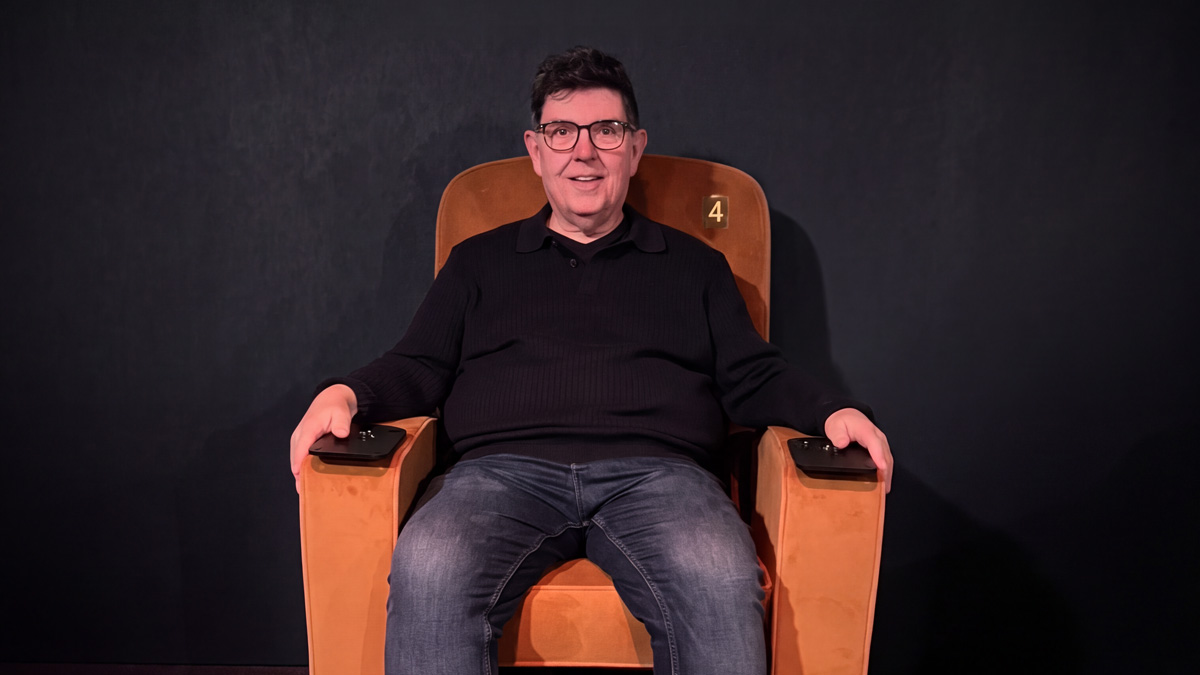
Kevin Markwick, owner of The Picture House, Uckfield, and the newly refurbed The Atrium, in East Grinstead, on the power of Annie Hall, failing upwards, and being scared to leave town.
I can hear Kevin Markwick chuckling to himself as he ascends the steep, chromium stairs up to The Atrium cinema. Construction has been months in progress, as part of an £800,000 renovation – ‘step outside your comfort zone, you know. And boy, is this stepping outside my comfort zone.’ Chutes are positioned to discard rubble, a lift occasionally shudders into action. The room in which the cinema was, and will be, is punctuated by the nasal drone of drilling, as builders climb up and down ladders with stoney-faced purpose.
I’m not sure what the joke is, but when Kevin eventually greets me at the top, he’s keen to begin the tour. In fact, he wonders why I hadn’t already started it myself – ‘did you not go in yet?’ I’ve been hovering awkwardly outside, awaiting his arrival.
The building, he says, was built in the 90s – on the resting place of the original single screen cinema ‘The Radio Centre’, a miniature replica of New York’s Radio City Music Hall. ‘‘They knocked it down to build this. There’s lots of glass. You can grow your tomatoes up there’’. I doubt this is a tested theory, but if I push memory to the edge of presumption, the air does feel a little thicker as I climb.
Here’s the church, and here’s the steeple. Open the doors and see all the people. The entire floor that composes the Atrium cinema is suspended in a tantalizing state of near-completion. Kevin walks me into each room, subtitling the scenery with a sense of hard-earned satisfaction. ‘Lovely new tables’. ‘Sexy lighting’. ‘Big armchair type chairs’. The Atrium will be the first in the UK to have Dolby Vision, as well as Atmos installed. The former is about the visuals, the latter concerns the sound. ‘‘It’s going to be extraordinary, so he says, and I’m inclined to take his word.
Kevin Markwick is at home, here, as he slides comfortably onto a waiting chair in the office, and asks me what I want to know. He’s at home here, because he has a an almost million-pound horse in the game. He’s at home because he loves films, movies, and pictures (evidenced in a meticulously updated Letterbox account, a blog, and a podcast). And he’s at home, because cinemas have, almost from the beginning, been – well – his home.
Kevin’s dad began working at The Picture House in Uckfield, which he later leased, in 1948 – the ‘peak’ of Hollywood. Across the pond, films accounted for more than 90% of Americans’ outlay on entertainment. In the UK, post-war optimism flowed freely into its cinematic vehicles – not necessarily in terms of subject matter (as evident in Olivier’s Hamlet), but in the returned ability to look outside of a narrowed, existential lens. Plus, there was the heating. ‘‘Cinemas were warmer than your house, and had an inside toilet. And you got to see the news without picking up a paper’’.
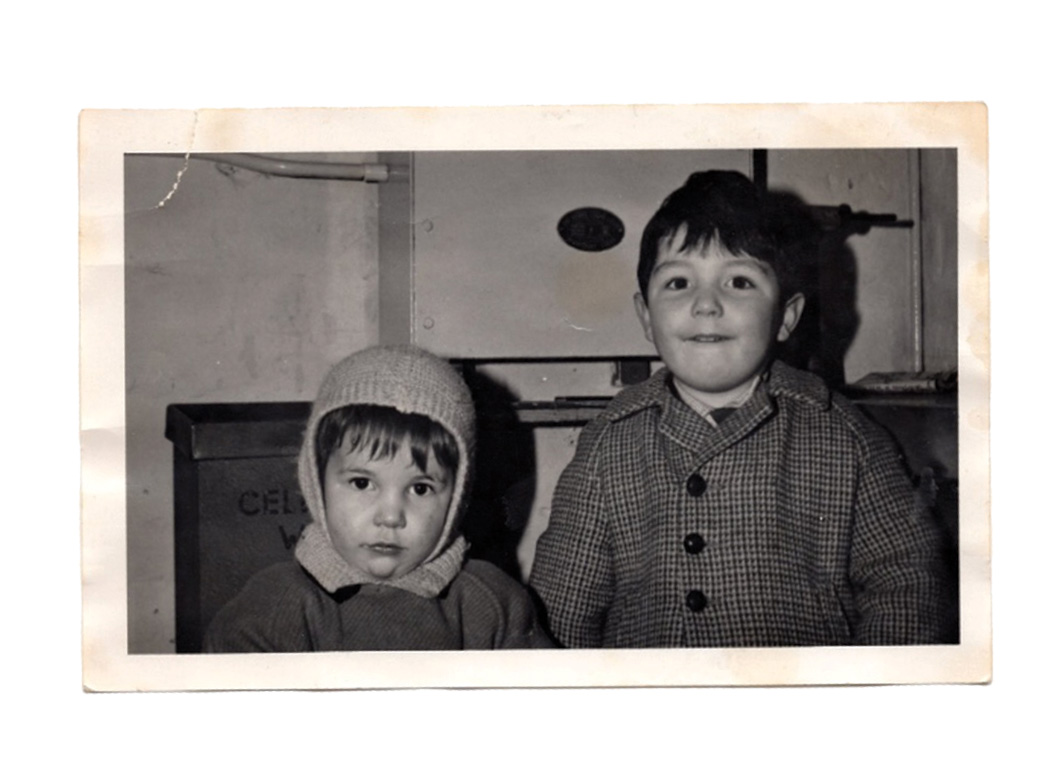
Kevin is amused again, now, about the fact his dad more or less missed the boat. ‘‘I’ve never made that connection before! He got in just to watch the glory days end’’. And yet, business sustained. The son of a now-cinema owner, Kevin grew up on a diet of storytelling; ‘the call to adventure, the refusal of the call, the crossing of the threshold’. Almost all his five a day. He’s still smarting from having missed out on Jaws when it first screened across the UK in the Christmas of 1975, as his dad didn’t want to bow down to Universal’s demand for a monthlong screen monopoly. Jaws didn’t show at The Picture House until October 1976, and Kevin hungrily took it all in. ‘‘Relentless osmosis’’. A year or so later, the cinema expanded to two screens, while Kevin was sitting his exams. He left without a single O-level to his name. ‘‘It was more interesting at the cinema than it was at school.’’
A discomforting meeting with a fossilised careers officer (‘there are some fine fillies out there’) led Kevin nowhere. He was a teenager in seventies Sussex. His favourite film was Annie Hall. Why, he asks now. ‘What did I know about a Jewish man living in New York and navigating romantic relationships? I didn’t know one end of a woman from another.’’ Answering his own question, he thinks back to the lobster boiling in the pot, a spider squashed with a tennis racquet in a bathroom. ‘‘Maybe it’s how I felt about life – misery and suffering and unpleasantness – and it’s all then over, much too quickly.’’ He laughs a little. He’s in on the joke.
What to do, then? Kevin wrote screenplays. He sold sketches and sitcoms that never got made. Nothing ever got made, he said, but he kept being paid to write them, so he kept writing screenplays, and they kept not being made. ‘‘Failing upwards’’.
‘‘The ship sailed. It went over the horizon, and it sunk to the bottom’’. Then, thirty-two years ago – misery, suffering, unpleasantness. Kevin’s dad died on his 65th birthday in Las Vegas. ‘‘Sadly, not in a hot tub with showgirls. On a Virgin Atlantic coach tour with my mum.’’ The business was ‘dumped’ in Kevin’s lap. He compares himself to George Bailey in A Wonderful Life, or the eponymous Billy Liar. Two men that imagine another path while walking the other. ‘‘Maybe I’m just too scared to leave town’’. In any case, staying in town meant he could watch a lot more films. Kevin had started in the projection room, lining up the maltese cross of the intermittent and the operating pin, which makes the shuttering noise we associate with old-school cinema. He’d shovelled popcorn, handed out tickets, and helped with the clean-up. Now, the stakes were higher – owning a business higher – but the lessons still applied. An eye for detail, a level head when things got busy. In Kevin’s steady projectionist hands, the Picture House underwent a total refurbishment, added another screen, and was voted the best independent cinema in the UK. Maybe, he really was the richest man in town.
In the final scene of Billy Liar, the title character meets his former girlfriend at the station. They board the train, but at the last moment, Billy gets off. ‘‘Just going to get some milk’’. He walks a deserted road back to his home. There’s perhaps some strained attempt of metaphor that could be wrought. But maybe, Kevin is just building a good cinema, where people can go to watch some good films. The train departs; Billy’s sat in the carriage, and he’s stood on the platform. Either way, films get shown. Life moves interminably on. Kevin’s 65th birthday lies a matter of months ahead. Tick, tick, tick. ‘‘I just want to have the best cinema in the world before I die’’, he says, raising his voice a little as the buzz of the drill sharply interjects. ‘‘Or, at least,’’ a little more softly this time, ‘‘the best cinema in my head.’’